Mastering Search Visibility with AI Overviews Tracking Tools
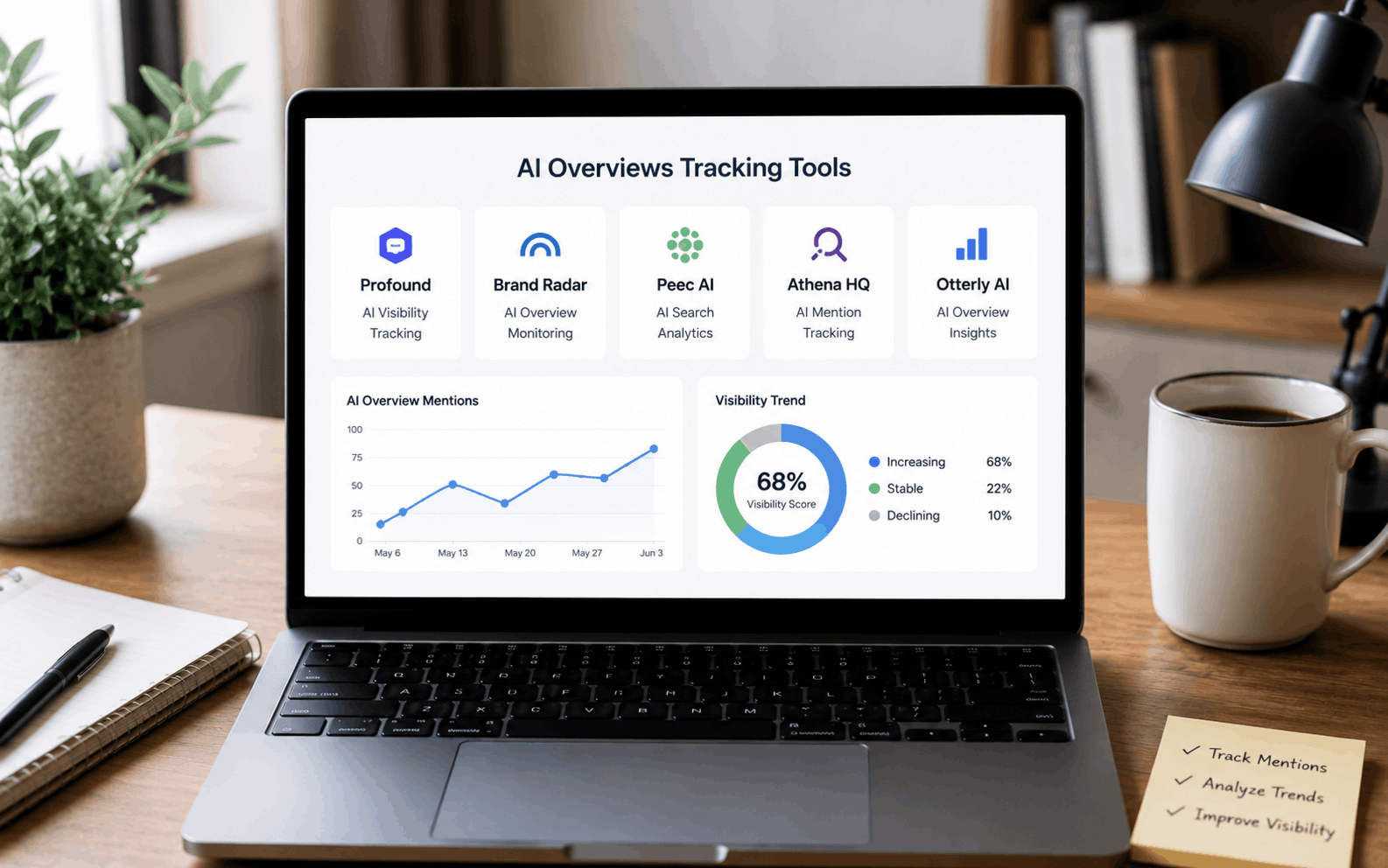
AI overviews tracking tools are specialized SEO platforms designed to monitor, measure, and analyze how often your website appears in Google’s AI-generated search summaries. Choose a tool that offers robust API integrations, real-time rank tracking, and comprehensive competitor analysis if accurate visibility forecasting matters more to your business than basic traffic metrics.
Google’s Search Generative Experience has fundamentally changed how users find information online. Organic links are frequently pushed down the page, replaced by instant, AI-generated answers. If you run a business, ignoring this shift means losing valuable traffic.
That is exactly why AI overviews tracking tools have become essential for modern founders and marketers. These platforms reveal exactly when, where, and how your brand appears in AI-generated search results.
Understanding these metrics helps you adapt to algorithm changes and secure top-tier visibility. This comprehensive guide will walk you through tracking your AI search presence, approaching your SEO strategy with the same precision as a rigorous SaaS development process.
What Are AI Overviews Tracking Tools and How Do They Function?
At their core, AI overviews tracking tools are specialized analytics platforms built to scrape, monitor, and report on artificial intelligence search features. Traditional rank trackers only tell you where your blue link sits on a page. Modern tracking solutions tell you if an AI model is citing your content directly.
These platforms operate as advanced cloud-based software, constantly pinging search engines to detect the presence of AI summaries. They record whether an AI overview is triggered for your target keywords. More importantly, they analyze the specific sources the AI uses to generate its response.
For a business operating as a software as a service, this data is an absolute goldmine. It allows you to see which of your landing pages or blog posts are actively feeding the AI ecosystem. [Check out our guide to tracking SEO metrics here] to learn how to measure the direct impact of these citations.
By leveraging these insights, you can optimize your content to answer user queries more directly. Understanding the exact trigger points for AI summaries is the first step toward reclaiming traffic that might otherwise be lost to zero-click searches.
Why Tracking AI Overviews is Critical for Your Product Roadmap
Many business owners treat SEO as an afterthought, separate from their actual product. However, your visibility in AI overviews should directly inform your product roadmap. When you know what questions users are asking the AI, you know exactly what features they are looking for.
If AI overviews tracking tools show that users consistently search for solutions your product lacks, you have identified a clear market gap. You can then prioritize those specific features in your next development sprint. Aligning search intent with product features is a proven strategy for sustainable growth.
This data is especially useful when you are building a Minimum Viable Product, or MVP. Instead of guessing what your early adopters want, you can look at the exact queries triggering AI overviews in your niche. This ensures your initial launch solves real, documented problems.
By treating search data as customer feedback, you bridge the gap between marketing and engineering. Your SEO strategy becomes a product strategy, ensuring every new update directly addresses the exact needs of your target audience.
Key Features to Demand from Your AI Overviews Tracking Tools
Not all tracking platforms are created equal. When evaluating your options, you need a solution built on a scalable SaaS architecture that can handle massive amounts of keyword data without crashing. Reliability and speed are non-negotiable when dealing with real-time search volatility.
First, look for comprehensive SERP feature detection. The tool must clearly distinguish between traditional organic rankings, featured snippets, and full AI overviews. Granular data segmentation allows you to see exactly where your traffic is coming from.
Second, demand historical tracking capabilities. AI search results change daily based on user interactions and algorithm updates. You need a platform that records these fluctuations over time. [Read our article on historical keyword analysis] to understand why historical data is crucial.
Here are specific features to look for in the best tracking platforms:
- Source URL identification: The ability to see exactly which URLs the AI cited.
- Pixel rank tracking: Measuring exactly how far down the page the organic results are pushed.
- Search intent categorization: Automatically grouping keywords by informational or transactional intent.
- Competitor overlap metrics: Showing which competitors are stealing your AI citations.
How to Implement Tracking Within an Agile Development Framework
Integrating new software into your workflow can be challenging. The best approach is to implement AI overviews tracking tools using principles borrowed from agile development. Start small, test rapidly, and iterate based on the data you collect.
Begin by tracking a small cluster of your most important, high-converting keywords. Set up automated reports to monitor how AI overviews impact this specific cluster. Focusing on a narrow dataset prevents your team from becoming overwhelmed by irrelevant information.
Once you establish a baseline, run two-week content optimization sprints. Update your targeted pages with clearer formatting, better statistics, and direct answers. Then, use your tracking tools to measure the impact of these changes. Rapid experimentation is the key to outsmarting AI algorithms.
If a content update results in an AI citation, document the exact changes you made. Create a standard operating procedure (SOP) based on that success. Roll this winning formula out to the rest of your website in subsequent agile sprints.
Transitioning Your SEO Strategy to Match a Subscription Model Mindset
The era of writing a blog post and forgetting about it is over. AI overviews require constant maintenance and optimization. You must treat your content library like a subscription model business, where continuous updates are required to retain your position.
AI overviews tracking tools are the dashboards that tell you when a piece of content is churning. If an AI summary stops citing your article, it means the algorithm found a fresher, more accurate source. You must proactively monitor these drop-offs to defend your territory.
Set up automated alerts for your top-performing pages. The moment you lose an AI citation, assign a writer to refresh the content. Add new statistics, update the formatting, and ensure the information is completely accurate. [Learn more about content refreshing strategies here] to keep your site competitive.
By adopting this continuous improvement mindset, you future-proof your search presence. Consistency and proactive maintenance will always outperform one-off viral marketing campaigns in the age of AI search.
Making the Final Decision on Your AI Search Strategy
Securing your brand’s visibility in an AI-first world requires the right technology and the right mindset. Relying on outdated rank trackers is like trying to navigate a modern city with a vintage map. You need real-time, accurate intelligence to survive.
Investing in robust AI overviews tracking tools is no longer optional for serious business owners. These platforms provide the exact blueprints needed to structure your content, optimize your answers, and outrank your competition in AI-generated summaries.
Take the time to evaluate the tools available on the market. Request demos, test their accuracy, and ensure they integrate smoothly with your existing workflow. The sooner you start tracking, the faster you can adapt.
Ready to take control of your search visibility? Start implementing these tracking strategies today, and watch your business thrive in the new era of generative search.
Frequently Asked Questions About AI Overviews Tracking Tools
What are the main benefits of using AI overviews tracking tools?
These tools allow businesses to see exactly when and where their content is cited by Google’s AI. This helps identify traffic drops, optimize content for generative search, and uncover new keyword opportunities that traditional rank trackers miss.
Are AI overviews tracking tools expensive for a small business?
Pricing varies widely based on the platform’s capabilities and the number of keywords tracked. However, the return on investment is high for businesses that rely on organic traffic, as securing an AI citation can significantly boost brand visibility. Choose an entry-level plan if cost matters more than tracking thousands of keywords.
How often should I check my AI search visibility metrics?
For high-value, transactional keywords, you should monitor your visibility weekly. AI search results can fluctuate rapidly based on algorithm tweaks and competitor updates. Regular monitoring ensures you can react quickly to any loss of citations.
Can these tracking tools guarantee I will appear in AI summaries?
No software can guarantee placement in Google’s search results. However, tracking tools provide the data necessary to understand what the AI prefers. By analyzing this data and optimizing your content accordingly, you drastically increase your chances of being cited.