Best Automated Revenue Syncing Tools for Marinas in 2026
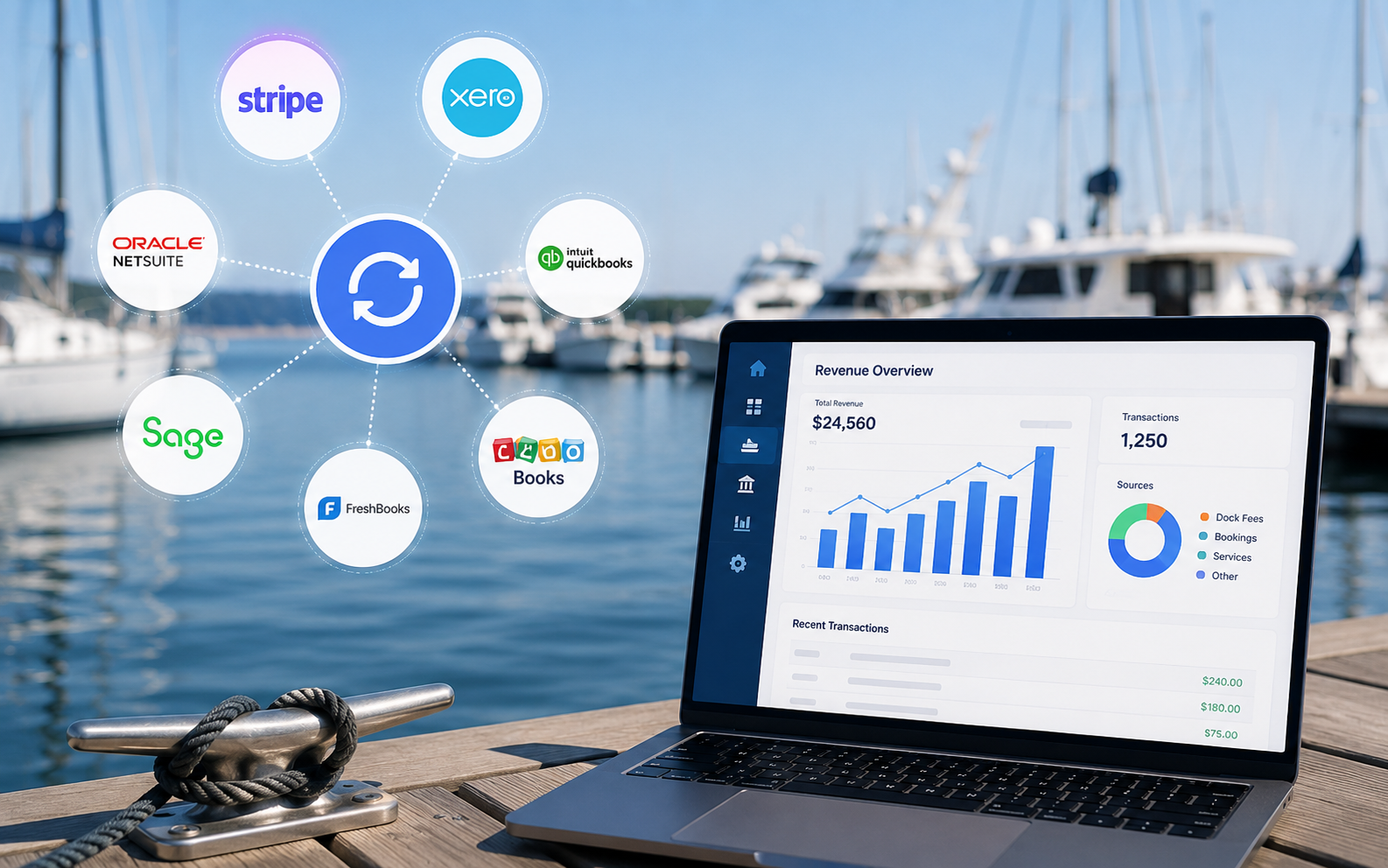
The best automated revenue-syncing tools for marinas connect your booking, point-of-sale, and accounting systems so that revenue data flows automatically into one place. Top options include Molo, Marina Master, DockMaster, and Speedy Dock—each pairing automation and machine learning to eliminate manual data entry, reduce errors, and provide marina owners with real-time financial visibility.
Running a marina means juggling slip rentals, fuel sales, retail purchases, service jobs, and seasonal contracts. When all that money flows through different systems, your books quickly turn into a mess. That’s why so many operators now search for the best automated revenue syncing tools for marinas—software that pulls every dollar into a single, accurate record without hours of manual work.
This guide breaks down what these tools do, why they matter, and how to pick the right one. We’ll look at real benefits, how the technology works, common use cases, and a few smart tips for getting found online if you run a marina business. By the end, you’ll know exactly what to look for and which platforms deserve a spot on your shortlist.
What Are Automated Revenue Syncing Tools for Marinas?
Automated revenue syncing tools are software platforms that connect your different income sources and push the data into one central system—usually your accounting software. Instead of typing numbers from your booking system into QuickBooks by hand, the software does it for you in real time.
Think about all the places money enters a marina: slip reservations, transient dockage, fuel dock sales, ship store retail, boat repair invoices, and membership fees. Each often lives in its own app. The best automated revenue syncing tools for marinas act as a bridge, linking these sources so every transaction lands in the right ledger automatically.
Most modern tools use automation and machine learning to categorize transactions, flag mistakes, and even predict slow seasons. This is where AI SEO concepts and smart data handling overlap—the same intelligence that powers search engines also helps these platforms sort messy financial data fast.
Why Marinas Need Automated Revenue Syncing
Manual bookkeeping eats time and invites errors. A single mistyped figure can throw off an entire month’s report. For busy marina owners, that’s a costly risk.
Here are the main reasons operators switch to the best automated revenue syncing tools for marinas:
- Fewer errors: Automation removes double entry, so your numbers stay accurate.
- Real-time visibility: See daily revenue across every department without waiting for a month-end report.
- Time savings: Staff spend less time on spreadsheets and more time helping boaters.
- Better cash flow: Faster reconciliation means you always know where you stand financially.
- Easier tax season: Clean, organized records make filing far less painful.
When your revenue data is synced and trustworthy, you make smarter decisions. You can spot which services earn the most, which months are slow, and where to cut waste.
How Do Automated Revenue Syncing Tools Work?
The technology sounds complex, but the process is simple once you understand the flow.
Step 1: Connecting Your Systems
First, the tool integrates with your existing software—booking platforms, point-of-sale terminals, fuel systems, and accounting apps. Most use APIs (secure digital connections) to link everything together.
Step 2: Capturing Transactions
Every time a boater pays for a slip, buys fuel, or books a repair, the transaction is captured instantly. Nothing slips through the cracks.
Step 3: Categorizing the Data
This is where machine learning shines. The software automatically sorts each payment into the correct category—dockage, retail, service, or fuel—based on patterns it learns over time.
Step 4: Syncing to Accounting
Finally, the categorized data flows into your accounting system. Reconciliation happens in the background, and your financial reports update in real time.
The whole cycle runs without staff lifting a finger, which is why the best automated revenue syncing tools for marinas save so many hours each week.
Top Automated Revenue Syncing Tools for Marinas
Here are the leading platforms worth considering. Each blends automation with marina-specific features.
Molo
Molo is a cloud-based marina management platform with strong accounting integrations. It syncs slip bookings, payments, and retail sales directly into your financial records. Choose Molo if you want a modern interface and tight QuickBooks integration.
Marina Master
Marina Master offers deep functionality for larger operations. It handles reservations, billing, and reporting while syncing revenue across departments. Pick Marina Master if you run a big marina with complex needs and multiple revenue streams.
DockMaster
DockMaster is one of the longest-running marina software systems. It combines management, service, and retail with accounting sync built in. It’s a solid choice for marinas that also run repair yards and parts stores.
Speedy Dock
Speedy Dock focuses on simplicity and reservations. Its automation handles online bookings and payments, then syncs the revenue cleanly. Go with Speedy Dock if you’re a smaller marina that values ease of use over heavy features.
Dockwa
Dockwa is popular for transient reservations and marketing reach. It automates booking payments and integrates with accounting tools, making it one of the best automated revenue syncing tools for marinas focused on attracting visiting boaters.
When comparing these, weigh your marina’s size, the number of revenue streams, and your existing accounting software. The right fit depends on your specific workflow.
Common Use Cases for Marina Revenue Syncing
Different marinas use these tools in different ways. Here are a few real-world scenarios.
Multi-Department Marinas
A marina with a fuel dock, ship store, and service yard can unite all three income streams. The best automated revenue syncing tools for marinas pull every department’s revenue into one clean report.
Seasonal Operations
Marinas in cold climates face huge seasonal swings. Automated syncing tracks summer peaks and winter lulls, helping owners plan budgets and staffing with confidence.
Multi-Location Groups
Companies that own several marinas need consolidated reporting. Revenue syncing tools roll up data from every location into a single dashboard, so leadership sees the full picture.
Member-Based Clubs
Yacht clubs with recurring dues benefit from automated billing and syncing. Membership fees flow into accounting automatically, reducing missed payments.
SEO Tips for Marinas Promoting Their Services Online
If you sell marina software or run a marina business, getting found online matters. Here’s how to apply agile SEO and modern search tactics.
- Target long-tail keywords: Phrases like “marina accounting software” or “slip booking automation” attract buyers ready to act.
- Write helpful content: Blogs that answer real questions build trust and rank well. This supports both traditional SEO and AI SEO, where search engines reward clear, useful answers.
- Use structured data: Add schema markup so search engines understand your pages. This helps you appear in AI-generated answers.
- Keep pages fast: Speed is a ranking factor. A slow site loses visitors and rankings.
- Earn local links: Partnerships with boating associations and local directories boost authority.
Machine learning now powers most search algorithms, so write naturally for humans first. An agile SEO approach—testing, measuring, and adjusting—keeps your content competitive as algorithms shift.
The Future of Revenue Syncing in Marinas
The next wave of marina software will lean even harder on automation and machine learning. Expect tools that predict revenue, suggest pricing, and flag fraud before it happens.
AI-driven forecasting will let owners model “what-if” scenarios—like raising slip rates or adding a fuel discount—and see the financial impact instantly. Voice-controlled reporting and mobile-first dashboards will make data even easier to access from the dock.
As these features mature, the best automated revenue syncing tools for marinas will become less about bookkeeping and more about strategy. Owners who adopt early will gain a real edge over those still buried in spreadsheets.
Final Thoughts
Marina finances don’t have to be a headache. The right software connects every income source, removes manual data entry, and gives you a clear, real-time view of your business. From Molo and Marina Master to DockMaster, Speedy Dock, and Dockwa, today’s platforms make it easier than ever to keep your books accurate and your mind at ease.
Choosing among the best automated revenue syncing tools for marinas comes down to your size, your revenue streams, and your budget. Start by listing the systems you already use, then pick a tool that integrates smoothly with them. Powered by automation and machine learning, these platforms free you to focus on what matters most—running a great marina and keeping boaters happy.
Frequently Asked Questions
What is the best automated revenue syncing tool for a small marina?
For small marinas, Speedy Dock is often the best fit. It focuses on simple reservations and payments, then syncs revenue cleanly without overwhelming features. Molo is also a strong choice for those wanting tight QuickBooks integration.
How much do marina revenue syncing tools cost?
Pricing varies widely based on marina size and features. Many tools use monthly subscriptions or charge a percentage of transactions. Expect anywhere from $50 to several hundred dollars per month. Request a custom quote for accurate pricing.
Do these tools work with QuickBooks?
Yes. Most leading platforms, including Molo and DockMaster, integrate directly with QuickBooks. This lets revenue flow automatically into your accounting system without manual entry.
How long does it take to set up revenue syncing?
Setup time depends on how many systems you connect. Simple setups can run in a day or two, while complex multi-location marinas may need a few weeks for full integration and staff training.
Are automated revenue syncing tools secure?
Reputable tools use encrypted API connections and
- marina CRM and billing integration
follow strict data security standards. Always confirm the provider offers secure payment processing and regular data backups before signing up.